
Monica Davidson
How can voters contact you?
Campaign Email - monica.davidson@budatx.gov
Social Media - Facebook
Phone - 512-787-3619
1. Tell us about your background, including your education, employment, leadership experience, and community involvement relevant to the position.
I am a third-generation Buda native, a graduate of Hays High School, and I continue to raise my family in the community that raised me.
Professionally, I have owned and operated several businesses in Buda and have spent many years working in business development and management. Today, I serve as CEO of the Greater Buda Chamber of Commerce, where I use that experience to help local businesses connect, grow and navigate the challenges of operating in a rapidly changing community.
My leadership experience also includes more than four years of service on the Buda Economic Development Corporation, where I gained a deeper understanding of business recruitment, infrastructure, economic development agreements and the importance of building a strong and diverse local tax base.
I have served on the Hays Education Foundation Board, supporting educators and students throughout our school district. I also currently mentor future women candidates through the LBJ Women’s Campaign School because I believe effective leadership includes helping others find their voice and prepare to serve.
I was first elected to the Buda City Council in 2020. I am currently serving my second term and am seeking the opportunity to serve a third.
My experience as a lifelong resident, business owner, economic-development leader, Chamber CEO and Council member gives me a broad understanding of how City decisions affect residents, employers and taxpayers.
Buda is not simply where I serve—it is my home. My family’s roots are here, I am raising my children here, and I remain committed to making sure Buda is prepared for the next generation while preserving the sense of community that has made it special for generations.
2. Texas law requires local law enforcement to cooperate with federal ICE officers. City government can limit the extent of that cooperation. Please explain where you believe appropriate limits should be.
The City of Buda follows state and federal law, and I believe our city management and Police Department have done an incredible job navigating those requirements while continuing to protect our residents. For me, the appropriate limit is reached when discretionary cooperation could make our community less safe. Our officers should cooperate when legally required and when there is a legitimate public-safety need. However, I do not believe Buda should voluntarily redirect its limited police personnel and local tax dollars toward broad civil immigration enforcement that is primarily the federal government’s responsibility.
3. With Heritage Homes, The Colony and Persimmon coming on line, Buda will have several thousand more homes and likely twice that many cars in the next few years. Considering the legislature’s reducing local control, how will you ensure we have the roads, water, fire and police protection to deal with this growth? Even as the Legislature reduces local control, I will continue using every tool still available to us: development agreements, impact fees, utility-capacity requirements, our capital improvement plan and partnerships with Hays County, TxDOT and our emergency-service districts.
First, growth must help pay for growth. We have already negotiated major infrastructure through development agreements. The Colony is contributing road reconstruction, a new bridge and land for an elevated water tank. Persimmon is helping deliver Marathon Road and a new connection to FM 1626. Second, we must connect development approvals to actual water and wastewater capacity. That means continuing our investment in Alliance Regional Water Authority, storage, reuse water, conservation and long-term supply planning. We cannot promise water on paper; we must know where it is coming from and how it will be delivered.
Third, public safety must be planned proactively. Police staffing, vehicles, equipment and facilities should be tied to population, calls for service and response times. Fire protection is provided through our emergency-service districts, and the City coordinates closely with them on station locations, road access, water pressure and development timing.
4. With the reductions in the 2026 city budget, how will you address your priorities and those of your constituents? A reduced budget requires us to be very clear about what is essential, what can be delayed and what we may have to do differently.
I would not support across-the-board cuts. They may look fair on paper, but they can weaken critical services while protecting lower-priority spending. My first priority would be the services residents depend on every day: police protection, emergency response, streets, water, wastewater and the employees who deliver those services. With our current budget season in process, the departments have done a responsible job at reducing what they can while not sacrificing essentials. We will also review expenditures on large city events to reduce those costs as well.
5. Do you support the use of surveillance cameras like Flock in your city? Why or why not?
These cameras do not replace police officers. They help officers use their time more efficiently by identifying vehicles associated with stolen cars, missing persons and criminal investigations. That is especially important when we are asking our Police Department to serve a growing community within real budget constraints. We also have local data showing that these cameras have helped our officers investigate cases and recover vehicles.
At the same time, I understand the concerns about privacy and how the information could be used. A useful public-safety tool should never become a system for broadly tracking law-abiding residents.
Buda already has an operational policy governing license-plate readers, but policies should not simply be adopted and forgotten. Access should be limited to trained personnel for legitimate law-enforcement purposes. Searches should be logged and auditable, data should be retained only for a limited period, and sharing with outside agencies should be controlled. The City should also receive regular reports showing how often the system is used, how it has helped investigations and whether the policy has been followed.
Technology can make our officers more effective, but public safety and civil liberties are not mutually exclusive. I support Flock because it has demonstrated value—but continued use must include transparency, oversight and firm limits on how the data is accessed and used.
6. How will you ensure that underserved areas and populations receive the services they need?
Every resident within Buda’s city limits deserves a consistent level of service, regardless of where they live, their income, age, language or ability to navigate City Hall.
At the same time, we recognize Buda’s geography. The majority of our residents are concentrated in one area of the city, while other neighborhoods are smaller or more geographically separated. That affects where facilities, programs and major infrastructure investments can serve the greatest number of people.
Buda cannot be all things to all people, especially with limited staff and financial resources. On Council, we prioritize based on safety, demonstrated need, the number of residents served and the overall public benefit. But we do not use efficiency as an excuse to overlook a neighborhood simply because it has fewer residents.
We use data and resident feedback to evaluate roads, drainage, sidewalks, parks, code enforcement, police response times and other services across the city. That helps us identify service gaps and direct resources where they are most needed.
Residents also play an important role. People need to advocate for their neighborhoods, participate in surveys, report problems, attend meetings and communicate with Council. We cannot address concerns we do not know about, so I encourage residents to stay engaged and make their needs known.
Equity does not mean every neighborhood receives the same project at the same time. It means every neighborhood receives fair consideration, residents have a meaningful opportunity to advocate, and we direct limited resources where they address the greatest needs and provide the greatest benefit.
7. Imagine it's 2030 - you are wrapping up your three-year term as mayor/city council member. You feel you successfully achieved your priorities. What does Buda look like? What has changed? What has stayed the same?
By 2030, Buda is a community that has grown—but has grown more intentionally.
Several of the major road and mobility projects we are working on today are complete or well underway. Residents have more ways to move through the city without relying on the same few intersections, and new development is contributing its fair share toward the infrastructure it creates.
Our water supply is more secure, with additional regional water, storage and long-term planning in place. Police staffing, equipment and facilities are keeping pace with the population, and we continue working closely with our emergency-service districts to maintain dependable fire and emergency response.
Buda also has a stronger and more diverse tax base. We have attracted employers, supported local entrepreneurs and created more opportunities for residents to work, shop and spend money here. That helps reduce the pressure on homeowners to carry the cost of growth by themselves.
I also see a more connected community—with improved parks, trails, sidewalks and public spaces serving residents throughout the city. City government is transparent, financially responsible and responsive, and residents understand how decisions are made and how they can participate.
What has stayed the same is just as important.
Buda still feels like Buda. We have protected our sense of community, supported the businesses and families that helped build this city, and preserved the places and traditions that connect us to our history.
Success does not mean that every challenge has disappeared. It means we planned ahead, completed important work and left Buda better prepared for what comes next—without losing sight of what made people choose this community in the first place.
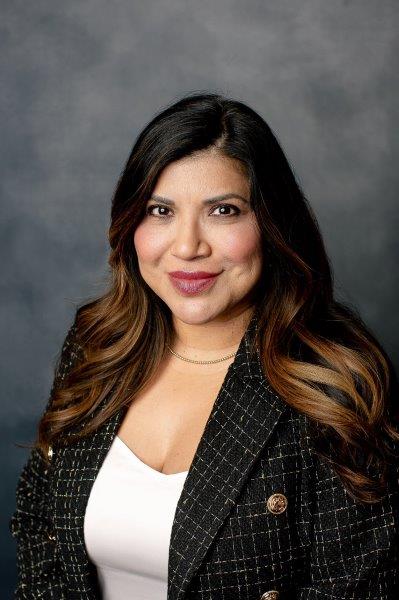
Monica Davidson is running for Buda's At-Large Position 2 seat. This means that all residents registered to vote in Buda can vote in this race.
Hays County uses vote centers, meaning Hays County voters may cast ballots at any vote center in the county during the times the vote centers are operating.
Early Voting Begins: October 19
Election Day: 11/3/26
